
Empowering Growth with Intelligent Cloud Services
We leverage cutting-edge infrastructure to unlock endless possibilities for your business. By harnessing emerging technologies, we build next-generation IT operations designed for maximum impact.
With advanced cloud expertise, we seamlessly manage businesses and endpoint IT infrastructure, whether in traditional legacy setups or complex hybrid multi-cloud environments. Our AI-driven solutions enable self-healing systems that monitor, predict, and autonomously respond, ensuring your IT infrastructure stays a step ahead in delivering performance and resilience.
IaaS, PaaS, SaaS Solutions and Services
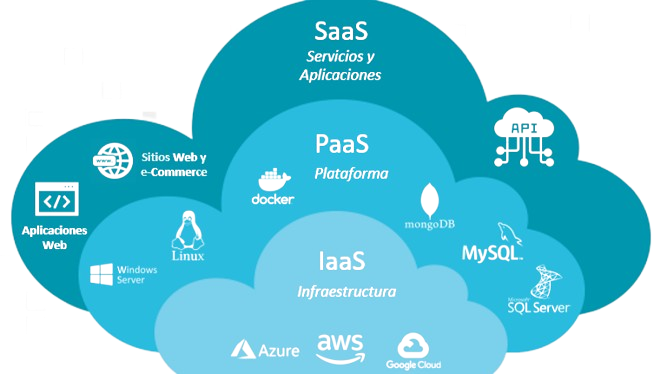
We offer a comprehensive suite of cloud solutions, including Infrastructure as a Service (IaaS), Platform as a Service (PaaS), and Software as a Service (SaaS). These flexible options empower businesses to scale operations, enhance productivity, and reduce costs.
Whether you need robust infrastructure, development platforms, or ready-to-use software, our solutions are tailored to meet your unique requirements. With seamless integration and end-to-end support, we help you leverage the full potential of the cloud.
High-Performance Computing
Unlock the power of High-Performance Computing (HPC) with our cloud solutions designed for data-intensive workloads. From scientific research to financial modeling and AI applications, our HPC services provide unparalleled computational power.
With scalable resources and advanced processing capabilities, you can achieve faster results and greater efficiency. Our secure, cost-effective HPC infrastructure is tailored to meet your performance needs, enabling your business to tackle complex challenges.
Challenges
Navigating Common Challenges to Drive Innovation and Efficiency
Cloud Cost Management
One of the biggest challenges businesses face with cloud infrastructure is controlling costs. While the cloud offers flexibility and scalability, unexpected expenses often arise from unmonitored usage, underutilized resources, or complex pricing models. Without proper cost management strategies, businesses can overspend on cloud services, reducing ROI and making it difficult to forecast IT budgets.
Data Security and Compliance
As businesses migrate to the cloud, data security and regulatory compliance become major concerns. Sensitive information stored in the cloud is susceptible to breaches, unauthorized access, and cyberattacks if not properly secured. Additionally, businesses must comply with regulations like GDPR, HIPAA, or industry-specific standards, which can be challenging to navigate without the right expertise or tools.
Integrating Multi-Cloud and Legacy Systems
Many organizations adopt a multi-cloud strategy or need to integrate cloud solutions with legacy systems, which can be complex and resource intensive. Ensuring smooth interoperability between platforms and environments requires careful planning and robust tools. Without proper integration, businesses face inefficiencies, data silos, and operational disruptions, hindering the overall benefits of cloud adoption.
Benefits to Your Business
Drive Innovation and Efficiency with Edge Computing
Cloud infrastructure services pave the way for innovation and long-term growth in an ever-evolving digital landscape. They empower businesses by enabling seamless collaboration and faster deployment.
Scalability and Flexibility
- Scale your resources up or down based on business demands, ensuring you only pay for what you use.
- Seamlessly accommodate expansion as your business grows, without needing extensive infrastructure investments.
- Provide secure access to applications and data anytime, anywhere, enabling a distributed workforce.
Cost Efficiency
- Minimize the need for upfront hardware and software purchases by shifting to a subscription-based model.
- Pay only for the resources you use, eliminating unnecessary overhead.
- Reduce IT maintenance expenses as cloud providers handle infrastructure updates and repairs.
Enhanced Security and Compliance
- Benefit from built-in security features such as encryption, firewalls, and regular vulnerability assessments.
- Simplify adherence to industry regulations with tools and protocols provided by cloud vendors.
- Ensure business continuity with automated backups and recovery options in case of data loss or disruptions.
Improved Collaboration and Productivity
- Enable teams to work on shared files and projects in real-time, regardless of location.
- Easily integrate with existing business applications for seamless workflows.
- Launch new services, applications, or updates quickly, ensuring your business stays ahead of the competition.
FAQs
Frequently Asked Questions About Edge Computing
Cloud infrastructure refers to virtualized IT resources, including servers, storage, and networking, delivered over the internet. It works by hosting these resources in data centers, allowing businesses to access them remotely on a pay-as-you-go basis.
Cloud infrastructure solutions offer scalability, cost efficiency, and flexibility. They enable businesses to adapt quickly to changing demands, reduce IT expenses, and enhance collaboration through remote access to data and applications.
Cloud services are categorized into:
- IaaS (Infrastructure as a Service): Provides virtualized hardware resources.
- PaaS (Platform as a Service): Offers development tools and environments.
- SaaS (Software as a Service): Delivers ready-to-use software applications.
Yes, most cloud providers implement advanced security measures like encryption, firewalls, and regular audits. However, businesses must also adopt best practices, such as strong access controls, to enhance security.
Yes, modern cloud services are designed to integrate seamlessly with on-premise and legacy systems, ensuring smooth operations and data flow across platforms.
Cloud infrastructure solutions eliminate the need for upfront hardware purchases, reduce IT maintenance costs, and operate on a pay-as-you-go model, making it highly cost-efficient for businesses of all sizes.
Cloud infrastructure solutions are highly reliable, with most providers offering 99.9% uptime guarantees. Features like automated backups and disaster recovery ensure business continuity even during unexpected disruptions.
Cloud infrastructure services enable businesses to scale resources instantly, launch new applications faster, and improve operational efficiency, all of which contribute to better growth opportunities in competitive markets.